
11/10/2026
If you have ever received a rubbish removal quote that looked fine at first, then somehow...
This Privacy Policy explains how Waste Disposal Balham collects, uses, stores, and shares personal data relating to customers and prospective customers in the Balham area. It is intended to comply with the UK General Data Protection Regulation, the EU General Data Protection Regulation where applicable, and relevant UK data protection legislation.
This Privacy Policy applies to all Waste Disposal Balham customers, prospective customers, and individuals who contact us or use our waste disposal and related services within the Balham area, whether as private individuals, business representatives, landlords, tenants, or property managers.
The data controller responsible for your personal data is Waste Disposal Balham. We determine the purposes and means of processing your personal data when you engage our waste disposal services, contact us for a quote, or otherwise interact with us in the course of our business activities.
If you have any questions about this Privacy Policy or the way we handle your personal data, you can contact us using the details provided on our main service communications or invoices.
We may collect and process the following categories of personal data about you when you use our services or communicate with us:
Identification and contact details, such as your name, address, email address, telephone number, and the address of the property or site where waste is to be collected or services are to be provided.
Service information, such as details of the services you request or receive, service dates and times, access instructions, property type, and special requirements relating to collection, recycling, or disposal.
Billing and payment information, such as your billing address, payment status, and basic transaction details necessary for invoicing and payment processing. Where we use third-party payment processors, we do not receive or store full payment card details.
Communication data, such as information contained in emails, telephone calls, text messages, and other communications you send to us, including enquiries, feedback, and complaints.
Technical and usage data, such as basic information about how you interact with our website or digital communications, including pages visited, dates and times of access, and general device information, where this is collected through essential cookies or similar technologies.
We process your personal data only where we have a lawful basis under data protection law. Depending on the specific processing activity, we rely on one or more of the following lawful bases:
Performance of a contract: We process personal data to provide you with waste disposal and related services, to respond to your booking requests, to arrange collections, and to manage your account, invoices, and payments.
Compliance with legal obligations: We process certain data to comply with legal and regulatory duties, such as financial record keeping, tax obligations, and waste management and environmental regulations.
Legitimate interests: We process personal data for our legitimate business interests, provided that your interests and fundamental rights do not override these interests. This includes managing our operations, improving services, protecting against fraud, and handling enquiries and complaints.
Consent: In limited cases, we may rely on your consent, for example for certain optional marketing communications. Where we rely on consent, you have the right to withdraw it at any time.
We use the personal data we collect for the following purposes:
To provide, manage, and fulfil waste disposal and related services, including arranging collections, confirming bookings, and communicating service updates.
To issue estimates, quotations, invoices, and receipts, and to administer payments and account records.
To respond to your enquiries, requests for information, feedback, or complaints, and to provide customer support.
To manage our business operations, including planning routes, allocating staff and vehicles, and ensuring a safe and efficient service.
To comply with legal, regulatory, and contractual obligations, including environmental, tax, accounting, and record-keeping requirements.
To protect our business from fraud or misuse and to ensure the security of our systems and premises.
We may share your personal data with trusted third parties who act as data processors on our behalf. These parties process personal data only under our instructions and in accordance with data protection law. Such processors may include:
IT and hosting providers who support our systems, data storage, and communications.
Customer management, scheduling, and routing service providers that help us manage bookings, appointments, and logistics.
Payment and accounting service providers that assist with billing, payment processing, bookkeeping, and financial reporting.
Professional advisers such as accountants or legal advisers, where reasonably necessary for the management of our business and compliance with legal obligations.
We may also share personal data with third parties where required to do so by law, regulation, or court order, or where it is necessary to protect our legal rights, to prevent fraud, or to assist law enforcement authorities.
We do not sell your personal data to third parties.
Where it is necessary for us to use service providers or systems located outside the United Kingdom or the European Economic Area, we take appropriate steps to ensure that your personal data is afforded an adequate level of protection. This may include using standard contractual clauses or relying on other lawful transfer mechanisms recognised by data protection law.
We retain personal data only for as long as is necessary for the purposes for which it was collected, and to meet legal, accounting, or reporting requirements.
Customer and service records, including contact details, service history, and invoices, are generally kept for a period consistent with applicable limitation periods and tax and accounting laws. After this period, data is securely deleted or anonymised so that it can no longer be linked to an identifiable individual.
Communication data, such as emails and service-related correspondence, may be retained for an appropriate period to enable us to respond to enquiries, manage ongoing services, and resolve disputes.
Where we rely on your consent for a particular type of processing and you withdraw that consent, we will stop processing the relevant data for that purpose and will delete or anonymise it unless another lawful basis applies.
Under data protection law, you have several rights in relation to your personal data. These rights apply to all Waste Disposal Balham customers and individuals in the Balham area whose personal data we process, subject to certain legal limitations and conditions.
Right of access: You have the right to request confirmation of whether we process your personal data and to obtain a copy of that data, along with certain related information.
Right to rectification: You have the right to request that we correct or complete any inaccurate or incomplete personal data we hold about you.
Right to erasure: You may request that we delete your personal data in certain circumstances, for example where it is no longer needed for the original purpose, or where you withdraw consent and there is no other lawful basis for processing.
Right to restriction of processing: You may ask us to restrict the processing of your personal data in specific situations, such as while we verify the accuracy of data or assess an objection.
Right to data portability: In some cases, you have the right to receive personal data that you have provided to us in a structured, commonly used, and machine-readable format and to transmit it to another controller, where technically feasible.
Right to object: You have the right to object to processing carried out on the basis of our legitimate interests, on grounds relating to your particular situation. We will stop such processing unless we have compelling legitimate grounds that override your interests, rights, and freedoms, or where processing is required for legal claims.
Where we rely on consent, you have the right to withdraw your consent at any time. Withdrawal of consent does not affect the lawfulness of processing carried out before the withdrawal.
If you wish to exercise any of your data protection rights or have questions or concerns about how we handle your personal data, you can contact us using the contact information provided on our service documentation or invoices. We may need to verify your identity before responding to certain requests, to protect your personal data from unauthorised access.
You also have the right to lodge a complaint with the UK data protection authority if you believe that your data protection rights have been infringed. We encourage you to contact us first so that we can address any concerns directly.
We may update this Privacy Policy from time to time to reflect changes in our services, legal obligations, or data processing practices. Any significant changes will be explained in an updated version of this Policy, which will apply from the date of publication. We recommend that you review this Privacy Policy periodically to stay informed about how we process your personal data.

GET A FREE QUOTE
Lucky for you we are here to help with your junk!
Choose our waste disposal Balham company and have your clearance at cost-effective rates.
 Tipper Van - Waste Dipsosal and Rubbish Removal Prices in Balham, SW12
| Space іn the van | Loadіng Time | Cubіc Yardѕ | Max Weight | Equivalent to: | Prіce* |
| Minimum Load | 10 min | 1.5 | 100-150 kg | 8 bin bags | £90 |
| 1/4 Load | 20 min | 3.5 | 200-250 kg | 20 bin bags | £160 |
| 1/2 Load | 40 min | 7 | 500-600kg | 40 bin bags | £250 |
| 3/4 Load | 50 min | 10 | 700-800 kg | 60 bin bags | £330 |
| Full Load | 60 min | 14 | 900-1100kg | 80 bin bags | £490 |
*Our rubbish removal prіces are baѕed on the VOLUME and the WEІGHT of the waste for collection.
 Luton Van - Waste Dipsosal and Rubbish Removal Prices in Balham, SW12
| Space іn the van | Loadіng Time | Cubіc Yardѕ | Max Weight | Equivalent to: | Prіce* |
| Minimum Load | 10 min | 1.5 | 100-150 kg | 8 bin bags | £90 |
| 1/4 Load | 40 min | 7 | 400-500 kg | 40 bin bags | £250 |
| 1/2 Load | 60 min | 12 | 900-1000kg | 80 bin bags | £370 |
| 3/4 Load | 90 min | 18 | 1400-1500 kg | 100 bin bags | £550 |
| Full Load | 120 min | 24 | 1800 - 2000kg | 120 bin bags | £670 |
*Our rubbish removal prіces are baѕed on the VOLUME and the WEІGHT of the waste for collection.
If you have ever received a rubbish removal quote that looked fine at first, then somehow...

If you live near Nightingale Lane and you have a sofa that will not fit through the hallway, a...
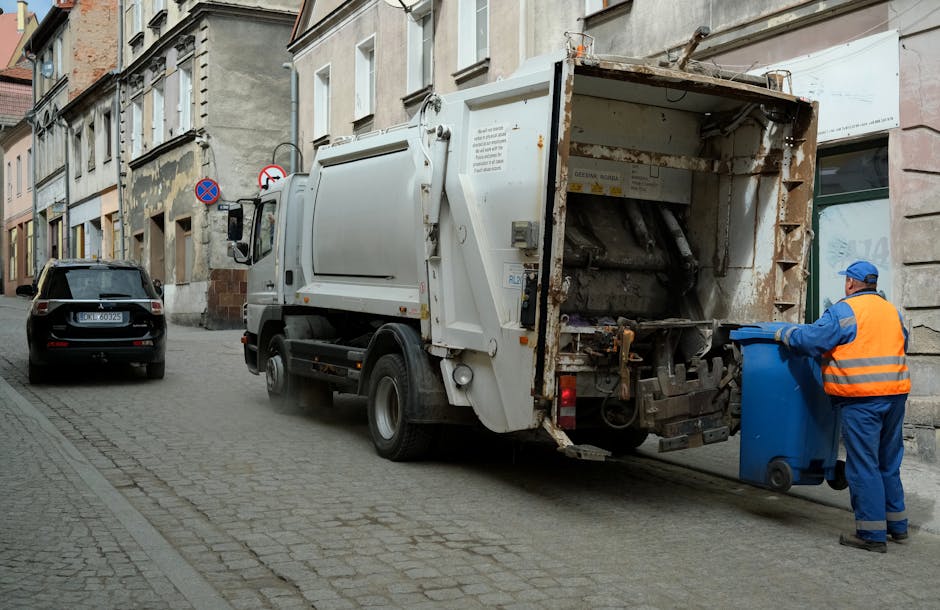
If you need rubbish removal on Balham High Road, you usually want the same three things: speed,...

Located in South London, Balham is quickly becoming a hotspot for events.
Balham, a thriving neighborhood in South West London, has become a magnet for property investors...

Balham, located in South West London, has quickly become one of the most desirable neighborhoods...

Balham, often referred to as "The Gateway to the South," has become an attractive hotspot for...

In the hustle and bustle of city life, it can be hard to find a moment of peace and quiet. The...

 (80)
(80)